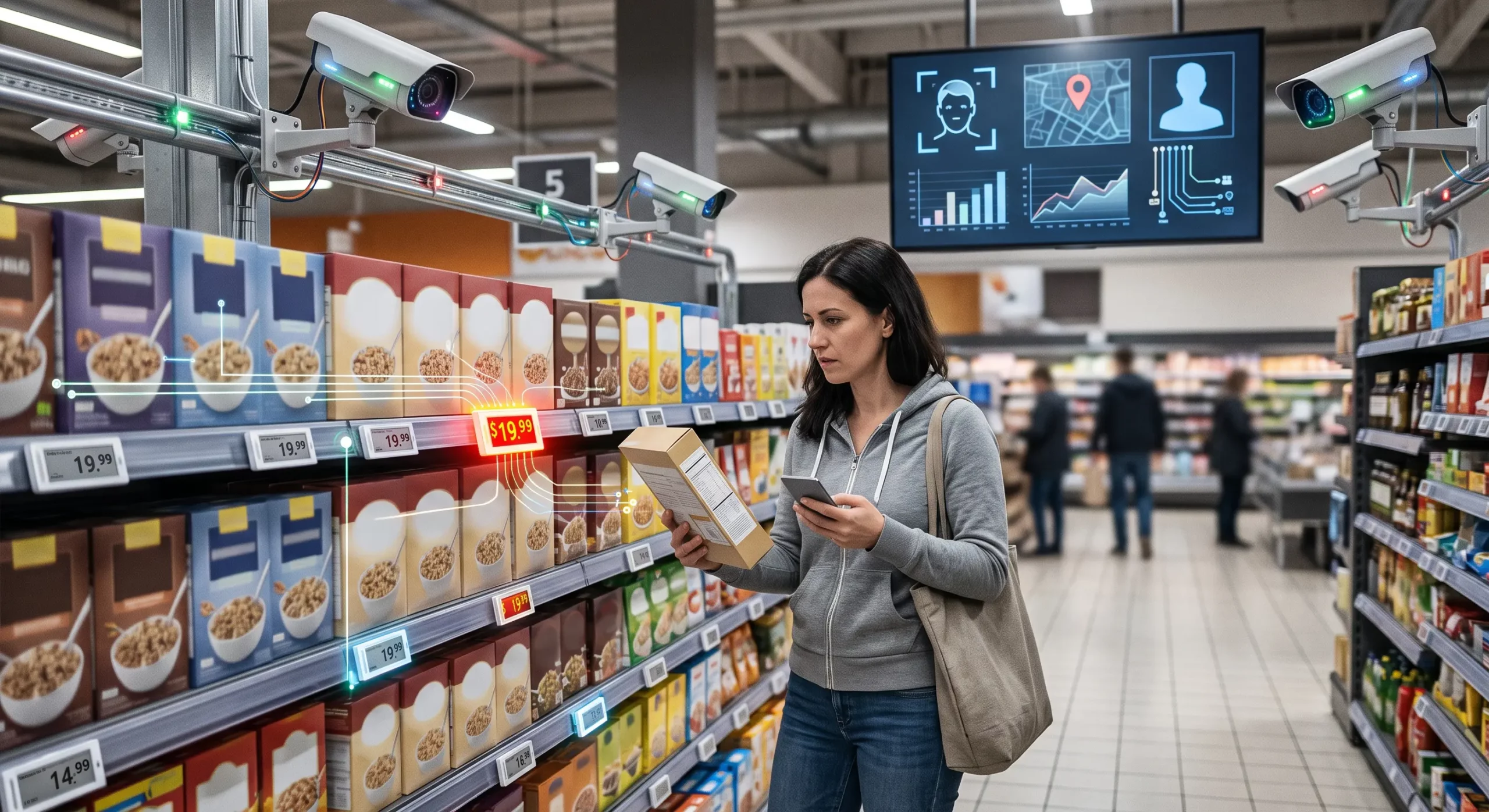
Have you noticed that fixed prices are disappearing online? According to Senator Josh Hawley, this isn’t just supply and demand. At an August 4, 2026 hearing of the Senate Judiciary Subcommittee on Crime and Counterterrorism, he took aim at what he calls “AI surveillance pricing,” calling it “one of the biggest scams in American history.”
The concern is that companies are no longer just using your data for targeted ads. Critics say they are using AI pricing tools to read your identity, location and urgency in real time, and then charge you the most they think you will pay.
The Examples Hawley Cited
At the hearing, Hawley pointed to cases of dynamic pricing aimed at individual shoppers:
- Target’s App and Your Location: Hawley said Target’s shopping app tracked shoppers’ locations in real time in order to charge as much as $150 more for a vacuum cleaner the moment they entered the store.
- Staples and Your IP Address: Hawley said a store like Staples may charge more online based on your IP address or your location.
- Lyft and “Fair Pricing”: Hawley said Lyft charged 55 riders in Missouri 29 different prices for the same route at the same time. Critics say this is pricing based on how badly the algorithm thinks you need the ride.
These are allegations made at a congressional hearing, not court findings, and the companies may dispute them. But they show how much your data can be worth at checkout.
Stop Paying the “Privacy Tax”
How would these systems know you are “Target shopper X” or “a Staples customer in a particular neighborhood”?
They rely on signals that ordinary browsing gives away: your approximate location (from your IP address or your phone’s location services), the cookies and logins that recognize you from visit to visit, and your device’s digital fingerprint, the mix of browser and device details that can single out your phone. If you let companies build that profile, they can use it to set your price. This is why we have written about understanding browser fingerprinting: it matters for your wallet as well as your privacy.
Your digital footprint has a dollar value. Companies know this, and critics say some are automating the process of using it to set prices. Protecting your privacy is now part of protecting your budget. A few simple habits help:
- Check prices while signed out of the store’s account, and compare.
- Turn off location access for shopping and ride apps when you don’t need it.
- Before a big purchase, compare the price on another device or network.
Incognito Browser for Android can help with part of this. We make it, so we’ll be specific. It runs in private mode all the time and wipes history, cookies and sessions when you exit the app (downloaded files are kept), so once you exit, a store’s site can’t use cookies from your earlier visits to recognize you. Signing in to your account, of course, still tells the store who you are. Its Agent Cloaking feature masks the browser and device that sites see. It is not a VPN, though. It does not hide your IP address, so a site can still estimate your location, and it doesn’t offer tracker blocking or fingerprint protection. If you also want your IP address hidden, use a reputable VPN alongside it. The goal is a marketplace where prices are based on products, not on you.